A prospective client should not have to sit through a pitch to discover why a firm is worth hiring. Before that conversation, the website, published insights, and supporting materials should give them something substantial to consider. For a boutique firm, those materials need to reflect the judgment clients are paying for.
One government relations firm had the expertise and results to justify retainers of $15,000–25,000 a month. Its marketing gave prospective clients little evidence of either. The gap was particularly awkward for a business whose work depended on understanding how reputation and perception influence decisions.
Eight Months and Nearly $90,000 Later
Over about eight months, the firm spent nearly $90,000 on DIY marketing. By late 2025, its do-it-yourself website was online, and work was happening across several channels. From inside the business, that activity could look like progress.
Three problems sat underneath it. The website and branding were inconsistent, with thin, generic materials that did little to support premium positioning. Content lacked a coherent strategy, asking readers for their attention and contact details before offering enough useful insight. The email list contained unverified and poorly maintained records, compromising the newsletter’s effectiveness.
The underlying issue
These problems reinforced one another. A white paper could contain useful thinking, but weak promotion limited its visibility. A newsletter could go out, but an unreliable list limited who it reached. Money was being spent without a coordinated program to make the work count.
Giving the Expertise Somewhere to Live
The professional website launched in early 2026, establishing a stronger brand foundation. That mattered because the firm’s public presence needed to support the quality of the conversations happening privately. Prospects should be able to look beyond a firm’s claims and understand what its people know.
The work also extended to materials used in business development: presentations, one-pagers as leave-behinds, and white papers as supporting documents. Each serves a different moment in a buying decision. A presentation helps structure a discussion. A one-pager gives someone a concise reference afterward. A white paper allows a prospect to examine the firm’s thinking in greater depth.
Materials that support the buying decision
Presentations
Help structure a discussion.
One-pagers
Give someone a concise reference afterward.
White papers
Allow a prospect to examine the firm’s thinking in greater depth.
Together, these materials give the firm more to work with when explaining its value. They support the process of closing business without asking a prospect to take every trust.
LinkedIn publishing settled into a rhythm of three posts a week. The newsletter became a biweekly publication built around substance, with each white paper providing approximately a month of content across the website, newsletter, and social channels.
A newsletter needs to deliver useful thinking in the email. A social post needs to offer an observation a reader can use. The calendar is a delivery schedule, not the strategy.
Repurposing also gives substantive research more than one opportunity to be read. Someone may encounter the firm’s thinking through a post, return to it in a newsletter, and later use a supporting document during a conversation. The material has to hold together across those encounters. The practical test is whether someone who reads only one piece still leaves with a useful insight into the firm’s thinking.
Newsletter and list management moved to Arma in May 2026. The list was verified and cleaned, and an opt-in signup was added to the website in September. That established a better foundation for an owned audience, with opt-in signup as a best practice for building it.
What Changed in the Numbers
The LinkedIn comparison shows growth beyond the increase in publishing volume. In July 2026, the firm published 14 posts and recorded 3,193 impressions. From August through early September, 16 posts recorded 4,453 impressions.
Impressions
+39.5%
3,193 to 4,453
Posts published
+14%
14 to 16 posts
Average impressions per post
+22%
Approximate increase
That represents a 39.5% increase in impressions on approximately 14% more posts. Average impressions per post rose about 22%. The reporting windows differ in length, so the totals should be read in that context. The per-post comparison adds useful evidence that the increase was not simply a matter of publishing more.
LinkedIn’s competitor analytics also placed the firm first in publishing volume among the nine firms in LinkedIn’s comparison set. That ranking documents a publishing habit the firm had put in place: showing up regularly with material drawn from its expertise.
A cleaner email list
The email figures showed another clear change. A March send had a hard bounce rate of 2.52%. From May through August, under Arma’s list management, hard bounce rates ranged from 0.09% to 0.35%.
Hard bounce rate comparison
Fewer messages were failing because of undeliverable addresses. That is a practical improvement in the list’s usability, although hard bounce rates alone do not establish inbox placement.
Once the list was cleaned and the newsletter rebuilt around substance, it began generating leads. For a firm rebuilding its communications, that response is a useful signal to track alongside audience reach and list quality.
A Discipline Worth Taking Seriously
The lesson for other boutique firms is practical. Maintain a consistent presence. Build and care for an owned audience. Give readers insight before asking for their information or time. Those principles matter just as much in a specialized legal practice or wealth advisory firm.
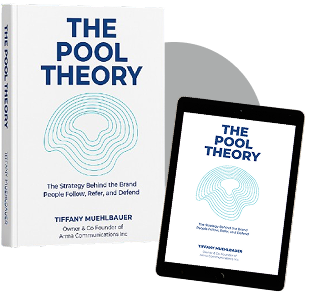
The firm had already committed nearly $90,000 to marketing. What it needed was a coordinated approach that connected its materials, publishing, and audience management. Before adding more spending, firms should examine how effectively those parts work together. This is the discipline behind Arma’s The Pool Theory™.
For partners reviewing their own marketing, start with what a prospective client can actually see. Does the work reflect your expertise? Does each piece offer something useful? Can your team point to a documented result?
Make your expertise visible
Take the Authority Audit from Arma Communications to identify where your marketing supports your firm’s credibility and where it needs attention.
Take the Authority AuditFree White Paper
Invisible Expertise: The Hidden Cost of DIY Marketing for Boutique Firms
One government relations firm, roughly eight months and nearly $90,000 of DIY marketing. Get the full case study, the cost breakdown and the five signs your own marketing is costing you more than it saves.